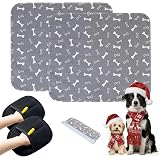
The amusing narrative above, featuring a discerning canine protagonist and the delightfully defiant Bernard, humorously posits the idea of pets ‘training’ their humans to uphold specific household rules. While the video playfully explores the concept of established boundaries from a pet’s perspective, the reality for many pet owners involves a more structured approach to behavior modification. The challenge often lies in consistently enforcing these boundaries, particularly when preventing pets from accessing certain areas or engaging in unwanted behaviors like counter surfing or furniture climbing. This is where advanced tools, such as the sophisticated pet training mat, are frequently utilized to foster a harmonious cohabitation.
Establishing clear boundaries is paramount in creating a predictable and safe environment for both pets and their human companions. Without defined rules, a domestic animal might perceive its habitat as entirely unstructured, leading to behaviors that, while natural for the animal, can be problematic for the household. Imagine if a beloved feline, much like Bernard, repeatedly claimed the kitchen counter as its personal perch or if an energetic dog consistently soiled a specific rug. These scenarios, though common, underscore the need for effective, humane interventions, which a well-implemented pet training mat can provide.
Deconstructing the Pet Training Mat: How Advanced Deterrents Function
The efficacy of a pet training mat is predicated on principles of classical and operant conditioning. These devices are meticulously engineered to emit a mild, non-harmful deterrent when a pet makes contact with their surface. Conversely, these mats are not designed to inflict pain but rather to create an undesirable sensation that discourages presence in a specific area. The primary objective is to interrupt an unwanted behavior consistently and gently, thus associating the restricted zone with an unpleasant (though safe) experience, rather than direct punishment.
Several types of these innovative deterrents are available, each employing a distinct mechanism. For instance, some training mats utilize a low-level static correction, often adjustable, to deliver a gentle, startling sensation. Other variants may incorporate a sudden, high-pitched sound, a puff of compressed air, or a vibration. The selection of a particular type is often influenced by the pet’s temperament, its sensitivity, and the specific behavioral challenge being addressed. It is imperative that any chosen method is always humane, with the intensity calibrated to be just enough to deter without causing distress or fear.
Selecting the Optimal Pet Training Mat for Behavioral Modification
The effectiveness of a pet training mat is significantly influenced by its appropriate selection and deployment. Consideration must be given to various factors, including the size and species of the animal, its individual sensitivity, and the dimensions of the area requiring restriction. For a smaller dog or a sensitive cat, a mat with adjustable, very low static correction or perhaps a sound-based deterrent might be more suitable. Conversely, a larger, more determined canine might necessitate a slightly more assertive static option, though always within humane limits.
Moreover, features such as customizable zones, where only specific sections of a larger mat are activated, or remote-controlled activation can enhance the mat’s utility. Imagine a scenario where a particular couch cushion is repeatedly clawed; a smaller, precisely placed mat could address this specific issue without restricting access to the entire furniture piece. Such precision ensures that the deterrent is applied only when and where the unwanted behavior occurs, maximizing the learning potential for the pet.
Integrating the Training Mat into a Holistic Behavioral Strategy
While a pet training mat is a powerful tool, its optimal impact is realized when integrated into a broader, comprehensive behavioral modification strategy. It should not be perceived as a standalone solution but rather as one component of a multimodal approach that prioritizes positive reinforcement. The mat functions as a clear “no” signal, but the pet also requires clear “yes” signals for desired behaviors.
Consistency, as alluded to in the video with Bernard’s seemingly unwavering disregard, is absolutely critical. If the mat is only occasionally active, or if the pet is sometimes allowed access to the restricted area, the learning process is severely undermined. The goal is for the pet to associate the area itself with the undesirable sensation, not just the mat. Therefore, diligent and unwavering application of the mat’s function is non-negotiable for establishing robust behavioral patterns. When the pet successfully avoids the mat or chooses an appropriate alternative, positive reinforcement, such as praise or treats, should be administered promptly to solidify the desired conduct. This dual approach helps the pet understand not only what is forbidden but also what is encouraged, fostering a more rapid and lasting behavioral shift.
Addressing Complex Scenarios with Pet Training Mats
The application of pet training mats extends beyond simple area restriction. In multi-pet households, for instance, careful placement and monitoring are required to ensure that the correct animal is deterred without inadvertently affecting others. Consider the playful dynamic between Bernard and the “well-trained” dog; a mat might be strategically placed to prevent Bernard from accessing specific areas meant for the dog, or vice-versa, depending on the training goals. Precision in placement becomes paramount.
Furthermore, troubleshooting may be necessary if a mat appears ineffective. Factors such as incorrect placement, an intensity setting that is too low for a particularly resilient animal, or even an underlying medical condition contributing to the behavior must be considered. In some instances, pets may exhibit desensitization over time, learning to tolerate the mild deterrent. In such cases, adjustments to the mat’s settings, a temporary relocation, or a consultation with a certified professional animal behaviorist might be warranted to fine-tune the training approach. The objective is always to guide the pet from an “I don’t care” attitude to an “I dog care” mindset, signifying their understanding and adherence to household expectations, thereby establishing a more respectful and manageable shared living space.
Pawsitive Answers: Your Pet Training Mat Q&A
What is a pet training mat?
A pet training mat is a tool designed to help manage pet behavior by gently deterring them from certain areas or actions. It emits a mild, non-harmful deterrent when a pet makes contact with its surface.
Why would I use a pet training mat?
You would use a pet training mat to establish clear boundaries and prevent your pet from accessing forbidden areas, such as kitchen counters or furniture. This helps create a more structured and harmonious environment for both pets and humans.
How do pet training mats work?
Pet training mats work by emitting a mild, non-harmful deterrent, like a low-level static correction, a high-pitched sound, a puff of air, or a vibration, when a pet steps on them. This creates an undesirable sensation to gently discourage unwanted behavior.
Are pet training mats safe for my pet?
Yes, pet training mats are designed to be humane and safe. They create an unpleasant, but not painful, sensation or sound that is calibrated to deter your pet without causing distress or fear.